SuperStar: Music Game
- 4.8
- Rating
- 100.00K
- Installs
- Free
- Price

 Analysis by App-foxy
I approached SuperStar: Music Game expecting a quick casual distraction, and that is exactly where it works best. It turns short bursts of play into a light rhythm challenge built around the appeal of becoming a virtual music star. My overall view is positive: this is an easy game to pick up, satisfying when your timing improves, and suitable for players who want music-themed entertainment without committing to a complicated adventure or competitive strategy title. Its main weakness is equally clear: players looking for deep musical control, a large amount of detail, or a completely purchase-free experience may outgrow it.
The game is presented as SuperStar Clash: Battle of Beats, but the experience is more approachable than that dramatic wording might suggest. I see it as a casual rhythm game first, with the “star” fantasy providing its identity. The controls are designed around reacting to music rather than learning a long list of rules, so the first session feels accessible even if you do not normally play music games. That simplicity is important because the best use for this title is not a long evening of concentrated gaming. It is the kind of app I would open while waiting for an appointment, taking a short break, or looking for something more active than scrolling.
How the music-focused gameplay holds up in everyday use
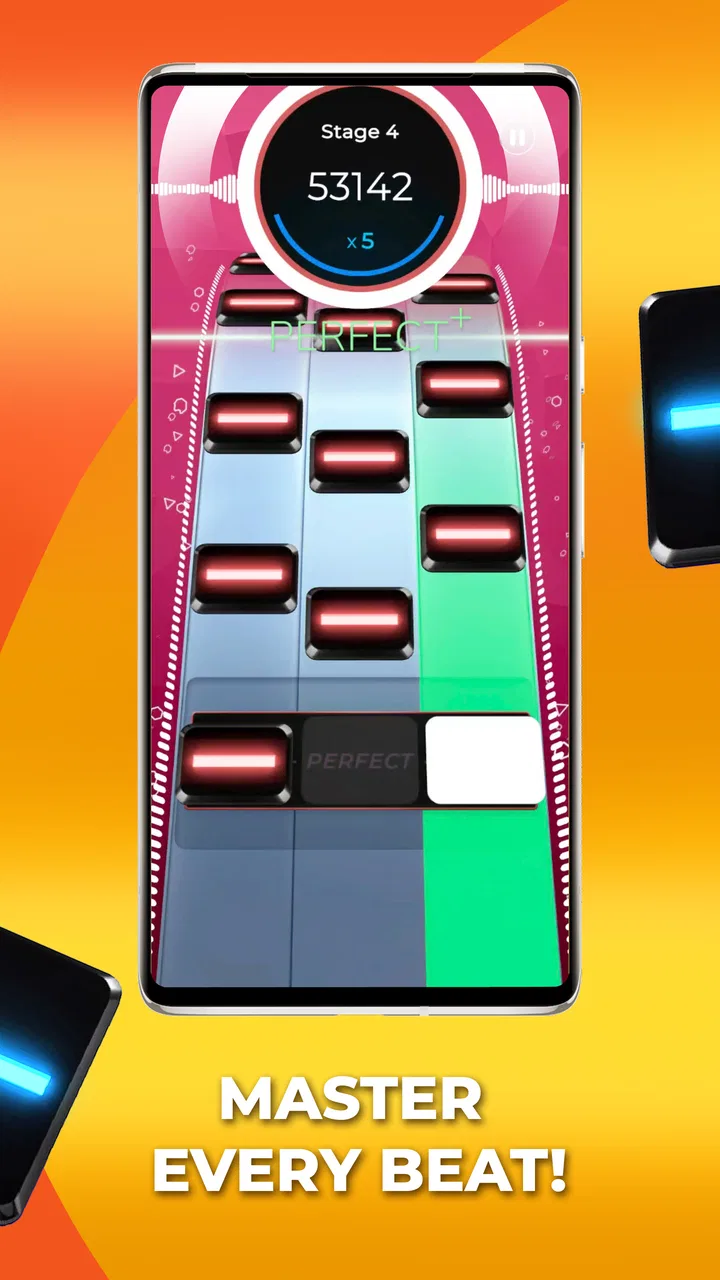
The strongest part of the experience is the relationship between sound and action. A good rhythm game makes each successful input feel connected to the track, and this one benefits from that immediate feedback. When I concentrate on the beat instead of tapping randomly, the game becomes noticeably more engaging. The challenge comes from keeping attention on the flow of the song, which gives even a short round a clear purpose.
You May Also Like

 AccuWeather: Weather Radar
AccuWeather Review: A Quick, Clear Forecast for Everyday Decisions
For everyday plans, the best forecast is the one you can understand quickly. AccuWeather makes rain timing, radar, and local conditions easy to act on, with a few trade-offs.

 Hill Climb Racing
Why Hill Climb Racing Still Turns Crashes Into One More Run
A tiny car, a bumpy hill and one more upgrade: Hill Climb Racing keeps resurfacing because its simple chaos makes every near-miss feel personal.

 AliExpress - Shopping App
AliExpress Makes Global Shopping Feel Personal, but Shoppers Bear the Risk
AliExpress turns a global marketplace into a pocket-sized discovery engine. Its reach is useful, its shopping loop compelling, and its trade-offs easy to miss.

 Lords Mobile: Kingdom Wars
Lords Mobile Is a Kingdom-Building Routine, Not a Quick Match
A case-by-case verdict on the building, battles, device demands, and social commitments that make Lords Mobile rewarding for some players and exhausting for others.

 PDF Scanner app - TapScanner
TapScanner Makes Paperwork Easier to Capture, Check, and Share
TapScanner makes scanning with a phone feel less like a rescue operation and more like a dependable step in getting work done. Its capture tools are useful, though not flawless.

 Block Blast!
 Shows How Much a Puzzle Game Can Leave Out
A quiet grid game shows why puzzle players increasingly value instant clarity, repeatable skill and low-pressure play—and where the genre still needs to catch up.
More From Our News Desk
View All News


That makes it a useful choice for players who enjoy improvement in small steps. You do not need to master everything in one sitting. I can imagine playing a round, noticing that my timing slipped during a faster passage, and trying again with a more deliberate approach. This creates a gentle learning loop: listen, react, make mistakes, and return with better concentration. It is not the same as practicing an instrument, but it does reward patience and rhythm awareness.
One practical tip is to treat the first attempt at a track as a listening session rather than a score chase. I found that paying attention to where the beat changes is more useful than immediately trying to play at maximum speed. Once I know the shape of a section, I can use the next attempt to focus on accuracy. This approach is especially helpful for younger players, because it turns failure into a simple observation exercise instead of making every missed input feel frustrating.
The game also fits casual mobile habits well because its central idea is easy to understand without a tutorial-heavy commitment. I do not have to remember a complicated inventory, map, or set of character abilities before starting. That makes it more inviting than many larger music-themed games that surround their songs with layers of menus and progression systems. Here, the musical reaction remains the reason to keep playing.
Still, accessibility should not be confused with unlimited variety. A rhythm game depends heavily on how much content remains enjoyable after the novelty fades. Without inventing details about the available track selection or progression, my practical advice is to judge the game by whether its core timing challenge already appeals to you. If you enjoy repeating a song to improve your performance, the basic loop has a chance to hold your attention. If you need a constantly changing story or a broad collection of unrelated activities, this will probably feel narrow.
Why the casual format is a genuine strength
The casual classification suits the game because it does not demand that every session become a major event. I like that distinction. Some mobile games use music as decoration while asking the player to manage a large amount of unrelated information. This title makes the beat the center of attention, which gives it a cleaner identity. It is easier to recommend to someone who wants a focused five-minute activity than to someone searching for a full role-playing experience.
Its theme also gives the game a little more personality than an anonymous tapping exercise. The idea of building a performance around a superstar concept helps frame each round as a small show rather than a purely mechanical test. That framing matters when the underlying controls are simple. It gives the player a reason to care about improving beyond simply filling a progress bar.
A realistic everyday scenario would be a short commute or a lunch break. I could play one round with headphones, put the phone away, and return to whatever I was doing without losing the thread of a long campaign. That makes the game less demanding than a strategy title, where stopping at the wrong moment can interrupt a carefully planned sequence. It is also more active than watching short videos, because my attention affects the result.
There is a useful trade-off here. Short-session design makes the game approachable, but it can also limit the feeling of discovery. A player who enjoys unlocking new worlds, solving puzzles, or making long-term tactical decisions will find fewer reasons to stay once the rhythm loop stops feeling fresh. I would not call that a flaw in the concept; it is simply the boundary of what this kind of casual music game is trying to do.
Where the experience may test your patience
The most meaningful limitation is the possibility of repetition. Rhythm games naturally ask players to replay material, and that is enjoyable only when improvement itself feels rewarding. I recommend deciding early whether you like the process of refining timing. If you prefer games that constantly introduce new mechanics, repeating a familiar musical pattern may begin to feel like work rather than play.
Another point worth considering is the presence of in-app purchases. The game is free to download, but optional items range from $1.99 to $99.99 per item. That broad range makes it important to approach the store calmly. I would play the free portion first and avoid treating every offer as necessary for progress or enjoyment. A free starting point is valuable, but it does not automatically mean the complete experience will be equally comfortable for every budget.
My personal rule for a game like this is simple: never buy something during a moment of frustration. If a difficult section causes repeated misses, I would first lower my expectations, listen more carefully, and try again later. That protects the casual nature of the game. Spending should be a deliberate choice, not a reaction to a poor round. This is one of the most useful habits for younger players or families sharing a device.
The age guidance is Everyone, which supports the game’s broad, approachable presentation. Even so, I would still pay attention to how a child uses any free-to-play title, particularly when optional purchases are available. The rating makes the content accessible, but it does not replace sensible device-level purchasing controls or an agreed household rule about spending.
Sound is another practical consideration. Because timing depends on hearing the music, the experience is likely to be less enjoyable in a noisy room or when the device is muted. I would not recommend starting a serious score attempt in a crowded public place unless the audio remains clear. On the other hand, this audio dependence can be a strength when you want a game that pulls your attention away from visual clutter. Listening closely makes the session feel more focused.
Players with motor or hearing-related accessibility needs may also want to think about whether the timing-based format matches their preferences. I would not assume that a simple control scheme works equally well for everyone. The game’s appeal rests on responding to musical cues, so anyone who finds that type of interaction uncomfortable may be better served by a puzzle or turn-based casual game with less dependence on timing and sound.
How it compares with other casual choices
Compared with a conventional puzzle game, this title asks for more active attention. A puzzle can often be paused while you think, whereas a rhythm round expects a response at the right moment. That makes the music game more energetic, but less flexible for multitasking. If I want something to play while watching television, I would probably choose a slower puzzle. If I want a short activity that makes me concentrate, the beat-based format is the better fit.
Compared with an endless runner, the focus is different as well. An endless runner usually emphasizes movement, distance, and quick visual reactions. This game’s identity is tied more closely to musical timing and performance. Someone who enjoys sound-driven interaction may find it more satisfying than simply avoiding obstacles, while a player who prefers constant motion may find the rhythm structure too controlled.
Large music games often surround their songs with elaborate collection systems, character development, and layered menus. The advantage of that approach is long-term depth. The disadvantage is that starting a round can feel like managing an account rather than playing a song. SuperStar: Music Game is easier to understand as a direct casual experience, but it may not offer the same sense of a huge, evolving hobby that a more elaborate alternative can provide.
That comparison leads to a clear recommendation. Choose this game if your priority is a straightforward music-centered break and you enjoy replaying challenges to improve timing. Choose a puzzle game if you want unlimited thinking time, an endless runner if you prefer constant visual movement, or a deeper music title if collecting and long-term progression matter more than immediate play.
Who will get the most from it
I think the best audience is made up of casual players, music fans, and people who enjoy games that can be understood quickly. It is also a reasonable first rhythm game for someone who has never tried the genre. The free entry point lowers the barrier to testing the concept, while the Everyone rating makes the presentation broadly approachable.
It may also suit families looking for a simple shared activity, provided purchases are handled carefully. A parent could let a child try the timing challenge, then discuss whether the child enjoys improving through repetition. That is more useful than assuming every colorful music game will automatically hold attention. The important question is whether the player likes listening, reacting, and trying again.
I would be more cautious about recommending it to competitive players who need extensive rankings, highly technical control, or a deep sense of mastery. I would also skip it if I wanted a story with memorable characters, a large world to explore, or a game that could occupy an entire evening without repetition. Those expectations point toward other categories.
For phone owners using an older device, the minimum operating system is Android 7.0, so compatibility is reasonably broad among Android users. The current version is 1.1.9, which is useful to check before installing because keeping an app updated can affect stability and access to its latest improvements. I would also make sure there is enough battery and a comfortable listening environment before attempting a serious session; both matter more here than they would in a quiet turn-based game.
My final recommendation
Cadenverse has made a focused casual game that understands the appeal of music-driven interaction. I like its approachable structure, its suitability for short sessions, and the way it gives improvement a clear purpose without requiring a large commitment. The average rating is 4.8 from around 2.3 thousand ratings, and the game has passed 100 thousand installs, which fits the impression of a title that has attracted a solid audience without needing to be treated as a massive mainstream platform.
Those figures are encouraging, but my recommendation is based more on the type of enjoyment it offers. This is a good choice when I want to concentrate on a beat, complete a quick challenge, and put the phone down. It is not the right choice when I want deep strategy, constant novelty, or a completely friction-free free-to-play experience.
The game is free, but the optional purchase range means I would begin with a clear spending limit and explore the core play before considering anything extra. That single step makes the experience easier to evaluate honestly. If the timing itself is fun, there is a good reason to keep playing. If the basic loop already feels repetitive, purchases are unlikely to solve the underlying problem.
My verdict: recommended for casual rhythm fans, occasional players, and anyone wanting a quick music-themed challenge; less suitable for players who need extensive depth or dislike replay-based gameplay. I would install it for a short test, use headphones when possible, focus on learning the beat rather than chasing an immediate perfect result, and keep expectations aligned with its casual identity. In that role, it does its job well.
FAQs for SuperStar: Music Game
01What is SuperStar: Music Game about?
SuperStar: Music Game is an engaging rhythm-based mobile game that allows players to tap along to their favorite songs from popular artists. The game features a variety of tracks, multiple difficulty levels, and leaderboards to compete with friends and other players globally. It's designed for music lovers who enjoy interactive gameplay.
02Is SuperStar: Music Game free to play?
The game is free to download and play, but it offers in-app purchases. These purchases may include additional songs, premium features, or items that enhance the gaming experience. While you can enjoy many features without spending money, some content may require purchases to unlock.
03What are the device requirements for SuperStar: Music Game?
SuperStar: Music Game requires a smartphone or tablet with reasonably up-to-date hardware. For Android, devices should run at least Android 5.0, while iOS users need iOS 10.0 or later. Adequate storage space is also necessary to accommodate the app and any additional downloadable content.
04Can I play SuperStar: Music Game offline?
No, SuperStar: Music Game requires an active internet connection to play. This connection is necessary to access the latest song updates, compete on leaderboards, and participate in events. Offline play is not supported, so plan to play where you have stable connectivity.
05How does the scoring system work in SuperStar: Music Game?
Scoring in SuperStar: Music Game is based on your timing accuracy as you tap notes that appear on the screen. Hitting notes perfectly increases your score multiplier, leading to higher scores. Competing on global leaderboards, your scores can earn you rewards and bragging rights among friends and other players.
Pros
- Engaging and interactive rhythm gameplay.
- Wide selection of popular songs and artists.
- High-quality graphics and smooth animations.
- Regular updates with new content.
- Challenging levels for competitive play.
Cons
- In-app purchases can be expensive.
- Requires a stable internet connection.
- Limited offline play options.
- Can be repetitive after a while.
- Occasional lag on older devices.

SuperStar: Music Game
Gallery